If you’re sorting this out near Ellen Stirling Dental in Ellenbrook, this guide walks through what usually happens and what only a check-up can decide.
Maybe it’s been a while since your last check-up, and you’re not quite sure where to start. Or you’ve just moved to Ellenbrook and the whole “find a new dentist” job has been sitting on your to-do list for months. Either way, choosing a dental clinic can feel oddly hard � most clinics look similar from the outside, and nobody wants to sit in a chair feeling rushed or talked into something.
This guide is here to make that choice easier. We’ll walk through what thoughtful care actually looks like in practice, what happens at a first appointment, the questions worth asking, and the few situations where you shouldn’t wait around comparing clinics at all. No sales pitch. Just the things we’d want you to know if you asked us over the front desk.
If you need a dental clinic in Ellenbrook
Let’s be honest: plenty of people put off the dentist until something hurts. If that’s you, you’re in big company. Life gets busy, appointments slip, and suddenly it’s been two years � or five. The good news is that a decent clinic won’t lecture you about the gap. They’ll just get on with helping you from where you are now.
What does good care feel like from the patient’s side of the chair? A few things stand out. You’re listened to before anyone picks up an instrument. You get told what’s happening and why, in words that make sense. And you never feel like a number on a production line.
Location matters too, and not for marketing reasons. When your clinic is close to home � whether you’re in Ellenbrook itself or nearby in Aveley or The Vines � you’re simply more likely to keep your appointments. Regular six-to-twelve-monthly visits are where small problems get caught while they’re still small. That’s not a slogan; it’s just how teeth work. A bit of early decay is a quick filling. Leave it long enough and it can become a root canal conversation.
If you’re looking at general dentistry in the area, the checklist below will help you sort the clinics that take their time from the ones that don’t.
Signs of a thoughtful clinic
You can learn a lot about a clinic before anyone looks in your mouth. Watch how the first ten minutes go.
They listen first. A good dentist asks what’s brought you in, what’s worried you in the past, and whether there’s anything you want fixed most. If the appointment starts with an examination and ends with a treatment plan you didn’t ask for, that’s worth noticing.
The plan is clear. You should leave knowing what’s been found, what needs doing soon, what can wait, and roughly what each option involves. Written treatment plans help here � you can take them home, think it over, and compare without pressure. If you feel pushed toward one path before you’ve had a chance to blink, slow things down. It’s your mouth and your money.
Nobody rushes you. Some decisions are urgent (we’ll get to those). Most aren’t. A clinic that respects your time will also respect your thinking time.
One practical thing you can check before you even book: whether the clinic tells you who its dentists are. At Ellen Stirling Dental, for example, the clinician profiles are published on the practice website with their AHPRA registration numbers, so you can look up exactly who’ll be treating you. That kind of transparency is a quiet but reliable sign of a clinic that takes accountability seriously.
Choosing care without the sales pitch
| Look for | Why it helps | Red flag |
|---|---|---|
| Time to explain | You understand the plan | Rushed yes/no only |
| Written options | You can compare calmly | One path pushed hard |
| Clear next step | You know what happens next | Vague follow-up |
Keep that table in mind during your first visit. It won’t make the decision for you, but it’ll sharpen what you notice.
What happens at a first visit

If you haven’t been to a new clinic in years, the unknowns can be half the stress. So here’s what usually happens, start to finish.
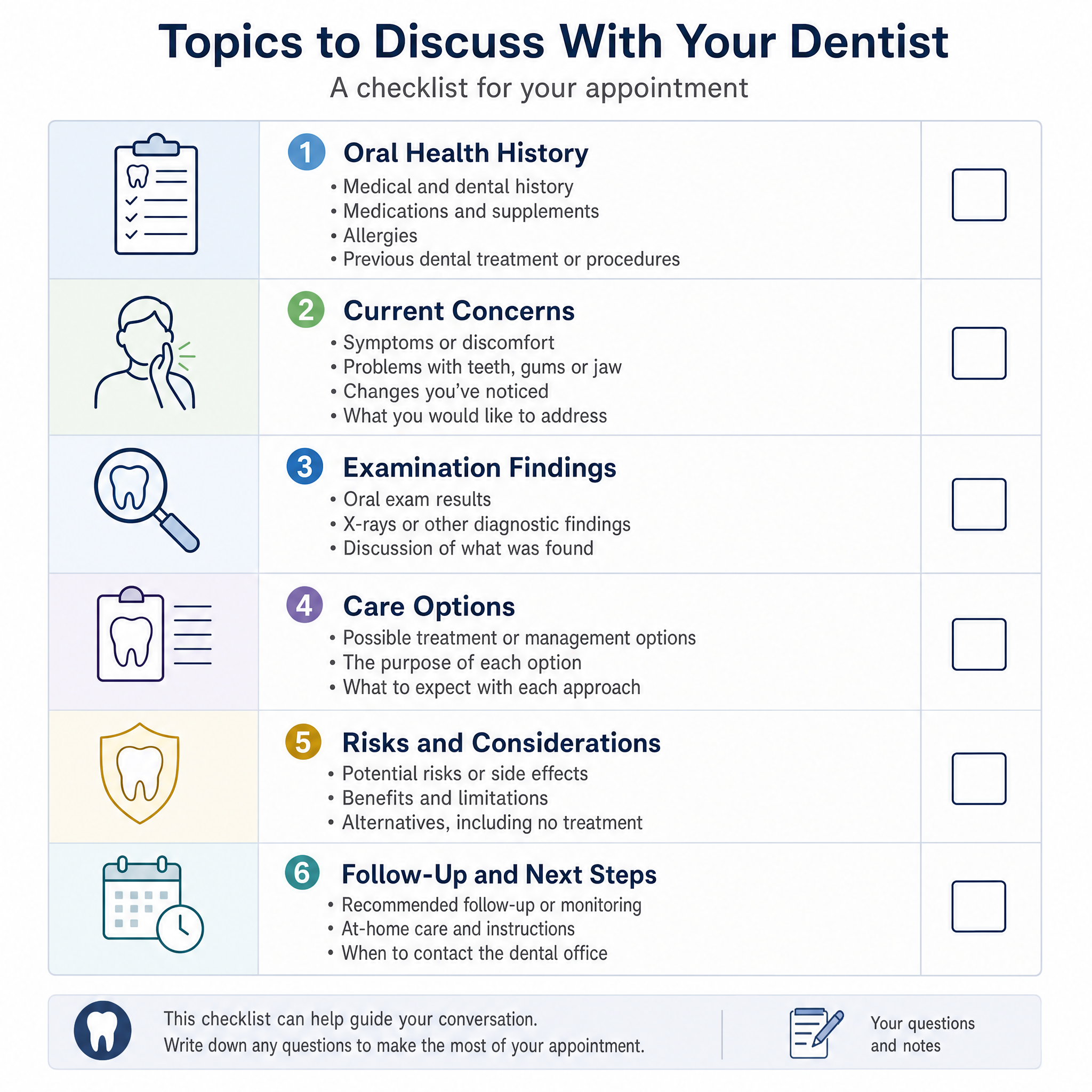
First, the paperwork and the chat. You’ll fill in a medical history form � medications, conditions, allergies, past dental work. This isn’t box-ticking. Things like diabetes, blood thinners, and pregnancy genuinely change how your dentist plans treatment, so answer it properly. Then your dentist will usually sit down and talk before anyone asks you to lean back. What brought you in? Any pain? Anything you’ve been putting off mentioning?
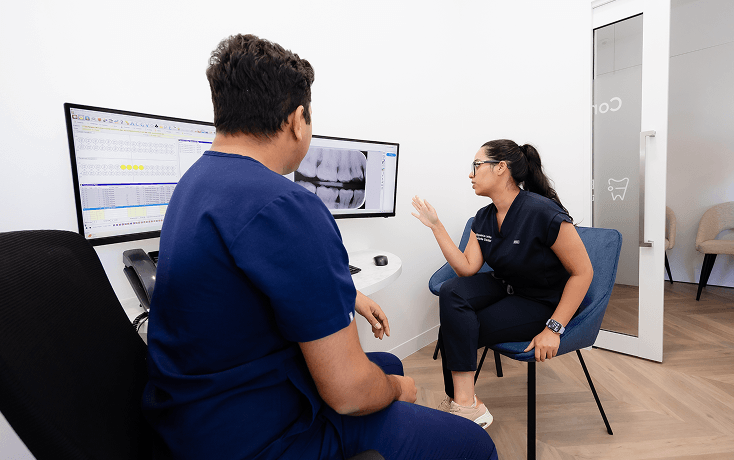
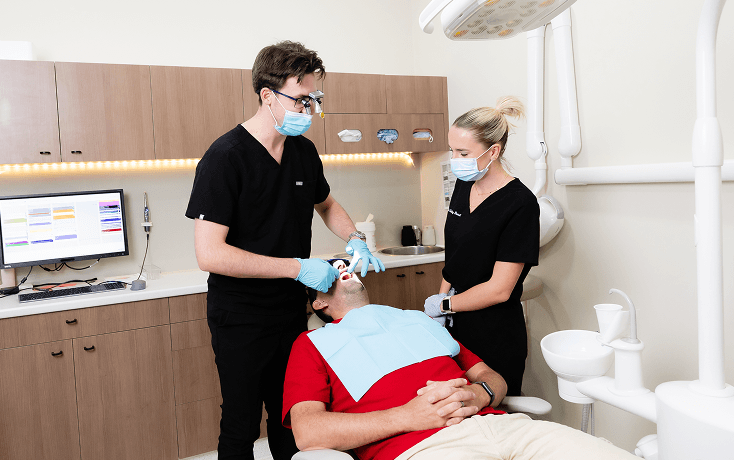
Then the examination. Your dentist checks each tooth, your gums, and the soft tissues of your mouth. You might feel the little probe tapping around, and there’s usually a periodontal check where your gum pockets get measured � you’ll hear numbers called out like “two, three, two”. That’s normal. X-rays are often taken at a first visit too, because a fair bit of what matters (decay between teeth, bone levels, old root fillings) can’t be seen with the naked eye.
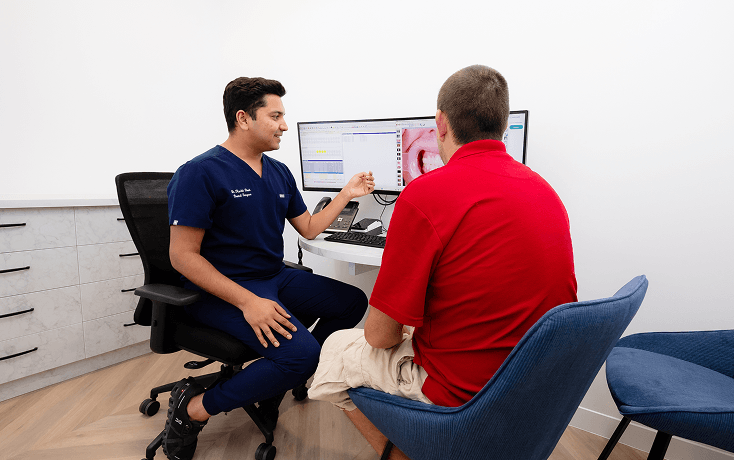
Finally, the conversation about options. This is the part that separates a good first visit from a forgettable one. Your dentist should explain what they’ve found, show you the X-rays if there’s something worth seeing, and lay out your choices � including the choice to do nothing for now and simply monitor a spot. You’ll usually get a sense of costs before any treatment is booked, so there are no surprises at the front desk.
One honest caveat: a first visit is a snapshot. It tells your dentist a lot, but some things only become clear over time � how quickly a worn tooth is wearing, whether a watched spot of early decay is progressing. That’s why the follow-up interval matters, and why it should be based on your mouth rather than a fixed calendar.
If you’re weighing up a first appointment, our practice welcomes new patients, and the first visit runs pretty much exactly as described above.
Questions worth asking
You don’t need to interrogate anyone. But a few well-chosen questions will tell you almost everything about how a clinic operates � and good dentists genuinely don’t mind being asked.
Who will actually be treating me?
Some clinics rotate clinicians; others book you with the same dentist each time. Neither is wrong, but continuity helps � a dentist who saw that hairline crack six months ago is better placed to judge whether it’s changed. At Ellen Stirling Dental, you’d be seeing one of the named dentists on the team, such as Dr Ethan Lloyd (Principal Dentist) or Dr Viren Chhabra (General Dentist), and you can ask for the same clinician at future visits.
What can wait, and what can’t?
This is the single most useful question you can ask after an exam. A trustworthy answer sounds like: “This filling needs doing in the next month or two. That early spot on the back molar � we can watch it. Here’s what would make us change our mind.” If everything is suddenly urgent, ask why.
What should I be doing at home?
The boring answer is usually the right one: brush twice a day with fluoride toothpaste, clean between your teeth daily, go easy on the frequent sugary snacks and drinks. But the details should be tailored to you. If your gums bleed, you might need a different technique or an interdental brush rather than floss. If your enamel is wearing, your dentist might suggest changing when you brush relative to acidic food and drink. Generic advice is fine; specific advice is better.
For a solid general overview of looking after your teeth between visits, the Healthdirect dental care guidance is a reliable, government-funded starting point � it covers brushing, diet, and when to see a dentist, all in plain language.
When not to wait
Most dental decisions can wait a week while you think. Some can’t. Here’s the short list where you should ring a clinic the same day � or seek urgent care if you can’t get in.
Facial swelling. Swelling in your face, jaw, or under your eye can mean a spreading dental infection. This one doesn’t get slept off. If the swelling is making it hard to breathe or swallow, that’s an emergency department situation, not a dental one.
Pain that keeps you up at night. A dull ache that comes and goes is worth booking in for. Throbbing pain that wakes you at 2am, or pain that no longer responds to over-the-counter relief, usually means the nerve of the tooth is involved. It won’t fix itself.
Trauma. A knocked-out adult tooth is time-critical � if you can, place it back in the socket or keep it in milk and get to a dentist fast, ideally within the hour. A broken tooth with bleeding from the middle, or a jaw injury, also needs same-day attention. A small chip with no pain? That can wait a day or two.
Bleeding that won’t settle after an extraction or injury � if it’s still going after firm pressure for 20 minutes, call.
Everything else � the chipped filling that doesn’t hurt, the mild sensitivity to cold, the crown that feels slightly high � deserves a prompt appointment, not a panicked one. When you ring, describe your symptoms clearly. A good reception team will triage over the phone and book you accordingly.
Frequently asked questions
Do you see kids?
Yes � family clinics like ours see children as well as adults, and early visits are mostly about getting kids comfortable in the chair. First appointments for little ones are usually short and low-key: a ride in the chair, a count of the teeth, maybe a polish if they’re up for it. If you’re after children’s dentistry near Ellenbrook, bring them in before there’s a problem � it makes every visit after that easier.
I’m a nervous patient. What can you do for me?
More than you’d think, and it starts with telling us. Dental anxiety is incredibly common, and you’re not the first nervous patient we’ve seen this week. We can book you a longer appointment so nothing feels rushed, agree on a hand signal so you can pause treatment at any point, and explain each step before it happens � some people want every detail, others want none, and both are fine. For some patients, treatment is broken into smaller visits so it never feels like too much at once. The main thing is that you stay in control of the pace.
Can I get my records transferred from my old dentist?
Yes, and it’s easier than most people expect. You can ask your previous clinic to forward your records and X-rays to your new one � usually a quick signed release form does it. Recent X-rays are genuinely useful: they can save you from needing repeat images and give your new dentist a baseline to compare against. If you can’t get them, don’t stress. We’ll simply start fresh with a new set.
What if I want a second opinion on cosmetic work?
Take one. Any treatment that changes the appearance of your teeth deserves a calm decision, and a second opinion costs you little more than an appointment. If you’re researching options, you can read about how we approach Cosmetic Dentistry � Lexia, Cosmetic Dentistry � Bullsbrook, and Cosmetic Dentistry � Henley Brook for patients across the north-eastern suburbs. Whatever you decide, your dentist should explain the trade-offs of each option � including what happens if you do nothing � before you commit.
The bottom line
Finding the right dental clinic in Ellenbrook isn’t about finding the flashiest fit-out or the longest list of services. It’s about finding a team that listens, explains, and lets you make decisions at your own pace � while still being straight with you about what can’t wait.
Start with a check-up. Ask the questions above. Notice how the answers feel. If you leave the chair understanding your own mouth better than when you walked in, you’ve probably found your clinic.
This article is general information only and isn’t a substitute for personal dental advice. Every mouth is different, so please consult a dentist about your own circumstances before making treatment decisions.